





How to Replace 10 Hotel Supplier With One Hotel API Integration: The Daka90 Case
One hotel API integration. Hundreds of suppliers. Real-time pricing live in weeks, no proprietary build, no supplier contracts to manage.

Daka90 Group is live with international hotels. Their new sector spans hundreds of destinations worldwide and launched this week at Daka90 Website. The whole sector runs on one Hubwayz hotel API integration. Without proprietary inventory engine, supplier contracts to manage in-house and multi-year build.
For a business whose entire brand is built on last-minute pricing, that speed of deployment matters more than most.
Who Is Daka90, and Why Does Pricing Speed Matter?
Daka90 Group leads Israel’s FIT (Fully Independent Travel) sector. Hundreds of thousands of Israeli travellers book flights, holiday packages, organised tours, and domestic hotels through the platform. Why? One promise: the lowest price, right now.
That promise isn’t marketing copy, it’s how the business runs. Daka90’s customers shop on urgency. They open the platform, search a destination, and expect the rate they see to be today’s rate. Not last week’s contracted price, still sitting in a spreadsheet.
Extending that model to international hotels meant one non-negotiable: real-time pricing across hundreds of global properties, accurate at the moment of search. After all, last-minute pricing only works when the rates on screen are genuinely current. Not cached, approximate, nor pulled from a feed that last refreshed four hours ago.

Why Real-Time Pricing Is Harder Than It Looks
Hotel rates never sit still. Occupancy, season, competitor moves, midweek demand, a supplier’s business rules. Any of them can move a price between morning and afternoon. Competitive at 9am, overpriced by 2pm.
For a travel platform positioning on last-minute deals, showing stale prices is not just a technical problem. It is a trust problem. A customer who books expecting one price and encounters a different one at confirmation does not come back.
Most travel businesses solve this one of two ways: direct supplier integrations that pull live rates, or a connected aggregation layer that does it for them. Direct integrations work until you have three suppliers, then five, then ten. The maintenance burden compounds with every new connection. Daka90 chose the aggregation path.
Hotel API Integration Powers the Daka90 Hotels Sector, See How
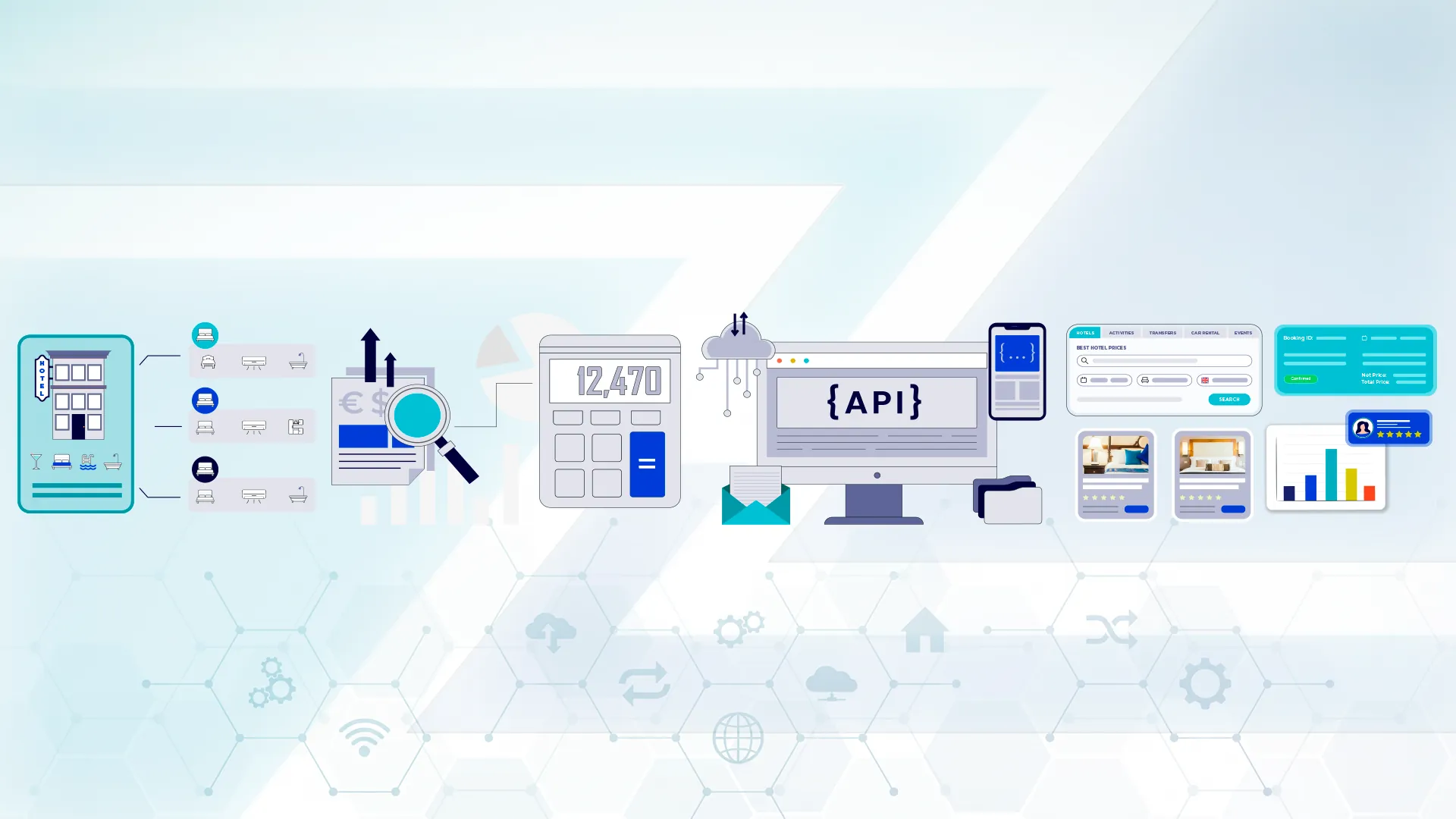
A single Hubwayz hotel API integration gives travel businesses one connection to hundreds of hotel suppliers, with live rates pulled at the moment of search. Hotel and room mapping runs automatically on the Hubwayz side, so when Daka90 returns results, they are deduplicated, normalised, and ready to display. No duplicate properties. No rate discrepancies between feeds.
For Daka90’s development team, this simplified the build considerably. One API endpoint. One data standard. One connection to maintain going forward. Every time Hubwayz adds a supplier or updates mapping, Daka90’s platform benefits without any additional integration work on their end.
The outcome their customers see is a hotels search that returns clean listings, competitive rates, and a booking flow that behaves exactly like the rest of the Daka90 platform: fast, accurate, and priced for right now.
“Our whole brand rests on showing the right price the moment a customer searches. We weren’t going to spend two years building a hotel distribution engine to do that. One Hubwayz hotel API integration gave us hundreds of suppliers with live rates from day one, and let my team stay focused on our product instead of maintaining supplier connections.”
(Asaf Daniel, CEO, Daka90 Group)
What Travellers Find When They Land on the Page
Access their platform and you will find a polished consumer hotel search: destination input, flexible dates, guest configuration, and popular destinations pre-surfaced across Crete, Athens, Rhodes, Larnaca, Prague, Barcelona, and Budapest.
The pricing is live. The inventory is global. And critically for Daka90’s positioning, the rates reflect what is available today, not a static contracted rate loaded once and left to age.
That is what one hotel API integration delivers when the infrastructure behind it is built for real-time distribution.
What Hotel API integration Means for Travel Businesses Considering a Similar Move
Daka90’s launch is a useful reference point for any travel operator weighing hotel expansion.
If your brand promise depends on pricing accuracy, you need live inventory. Cached or manually updated rates will eventually break that promise in front of a paying customer, and that is a hard reputation to repair.
How many suppliers can a team realistically manage on direct connections? For most operations, the honest answer is two or three. Past that, you are signing up for constant work: API changes to chase, mappings to update, duplicate listings to clean. The control you gain stops being worth what it costs you. An aggregation layer carries that load instead.
And if the question is how fast you need to go live: a proprietary aggregation build takes 12 to 18 months at minimum, before any ongoing maintenance cost. An API-first integration through Hubwayz can reduce that to weeks, depending on your existing platform architecture.
Hubwayz was built for exactly this kind of expansion. One API, natively cloud-based, with built-in hotel and room mapping connecting you to hundreds of suppliers from day one. Your team spends time on product, not plumbing.
Want to see what a Hubwayz hotel API integration could look like for your platform? Book a free demo and we will walk through your specific setup.
Asaf

We recommend the following articles for you
17 Jul 2026 • 3 mins reading



22 Jun 2026 • 6 mins reading
11 Jun 2026 • 3 mins reading
